
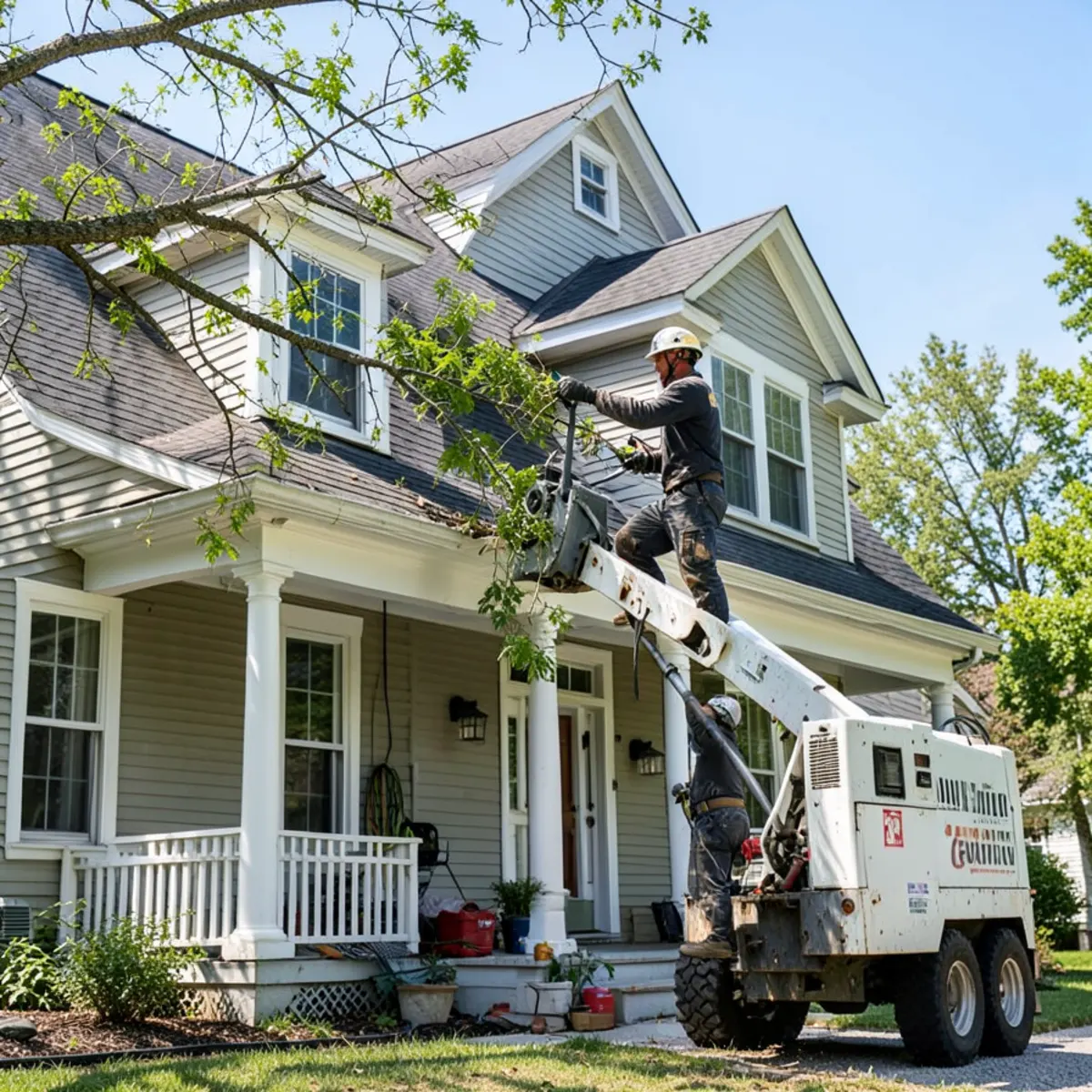
Structural Pruning, Canopy Thinning & Roof Clearance in Lansing
Professional tree trimming in Lansing is essential preventative care for residential shade trees. When left untrimmed, mature oak, maple, and linden canopies develop dense, overextended lateral branches that scrape against asphalt shingles, dislodge aluminum gutters, block chimney flues, and create direct elevated pathways for raccoons and squirrels. During Mid-Michigan's humid continental winters, dense foliage and crossing limbs act as an ice sail, trapping freezing rain until massive scaffold leads fracture.
Total Tree Maintenance delivers disciplined structural pruning and selective canopy thinning across Lansing and adjacent Ingham, Eaton, and Clinton counties. Operating from our central hub at 3105 S Martin Luther King Jr Blvd, our arborists balance architectural safety, seasonal tree health, and neighborhood aesthetics. We remove hazardous deadwood, establish safe clearances around roofs and utility drops, and open the internal canopy to sunlight and natural air movement.
What Our Professional Lansing Tree Trimming Service Includes
Tree trimming is not random branch cutting; it is the targeted structural management of a living tree's crown. Our crew adheres to ANSI A300 national standards, executing six distinct pruning objectives tailored to your landscape:
- Crown Cleaning & Deadwooding: Systematic removal of dead, diseased, broken, or dying limbs 2 inches in diameter and larger to eliminate falling hazards over driveways, patios, and play areas.
- Crown Thinning for Wind & Ice Resistance: Selective reduction of small tertiary branches in the outer and mid-canopy (never exceeding 20–25% of total foliage in a single season) to reduce wind resistance and winter glaze ice loading.
- Crown Raising & Ground Clearance: Pruning low-hanging lateral branches to establish standard clearance: 8 to 10 feet above pedestrian sidewalks and 14 feet above streets and driveways for service vehicles.
- Roof & Structural Clearance Pruning: Establishing a safe 6-to-10-foot perimeter buffer between building envelopes (shingles, siding, dormers) and mature tree limbs to stop shingle abrasion and pest roof access.
- Corrective & Structural Training: Pruning young and intermediate trees to eliminate competing co-dominant leaders, crossing branches, and narrow V-crotches with included bark before they develop into catastrophic trunk splits.
- Brush Chipping & Complete Lawn Cleanup: Feeding all severed limbs directly into our commercial brush chipper on site and performing complete lawn raking and driveway blow-downs.
Need Professional Tree Trimming & Pruning in Lansing?
Call our local dispatch directly at (321) 677-9055. Free on-site evaluations and itemized written estimates.
Lansing Hub
3105 S MLK Jr Blvd
Transparent Pricing
Free Itemized Written Scope
Safety First
ANSI Z133 & MISS DIG 811
Storm Ready
Fast Local Crew Dispatch
Recognizing When Your Lansing Trees Need Professional Pruning
Homeowners frequently wait until an overextended limb breaks during a summer thunderstorm before requesting tree service. Identifying crown defects early preserves tree health and prevents structural property damage. Schedule a trimming inspection if you notice:
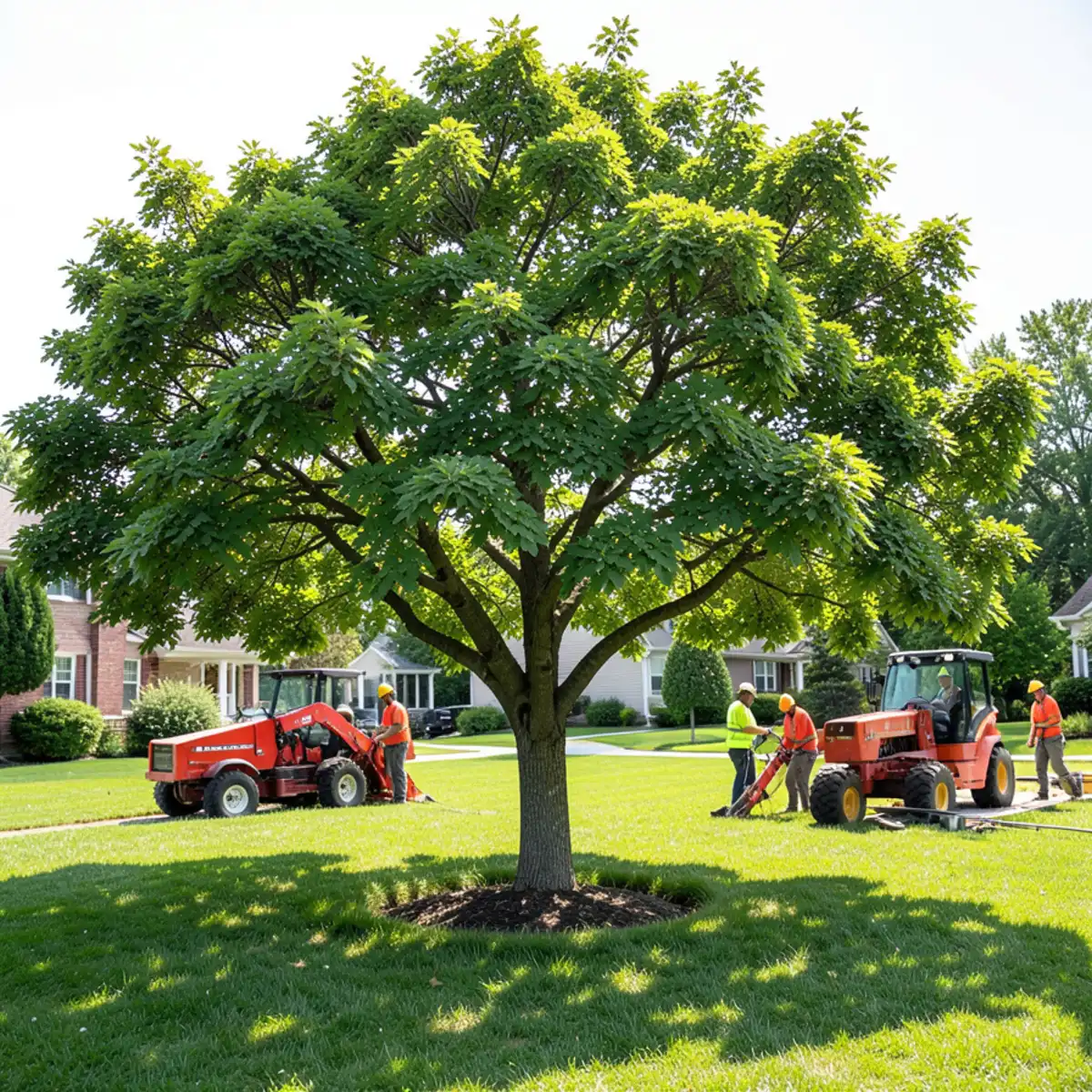
Technical Execution
Utilizing specialized equipment for safe residential property access.
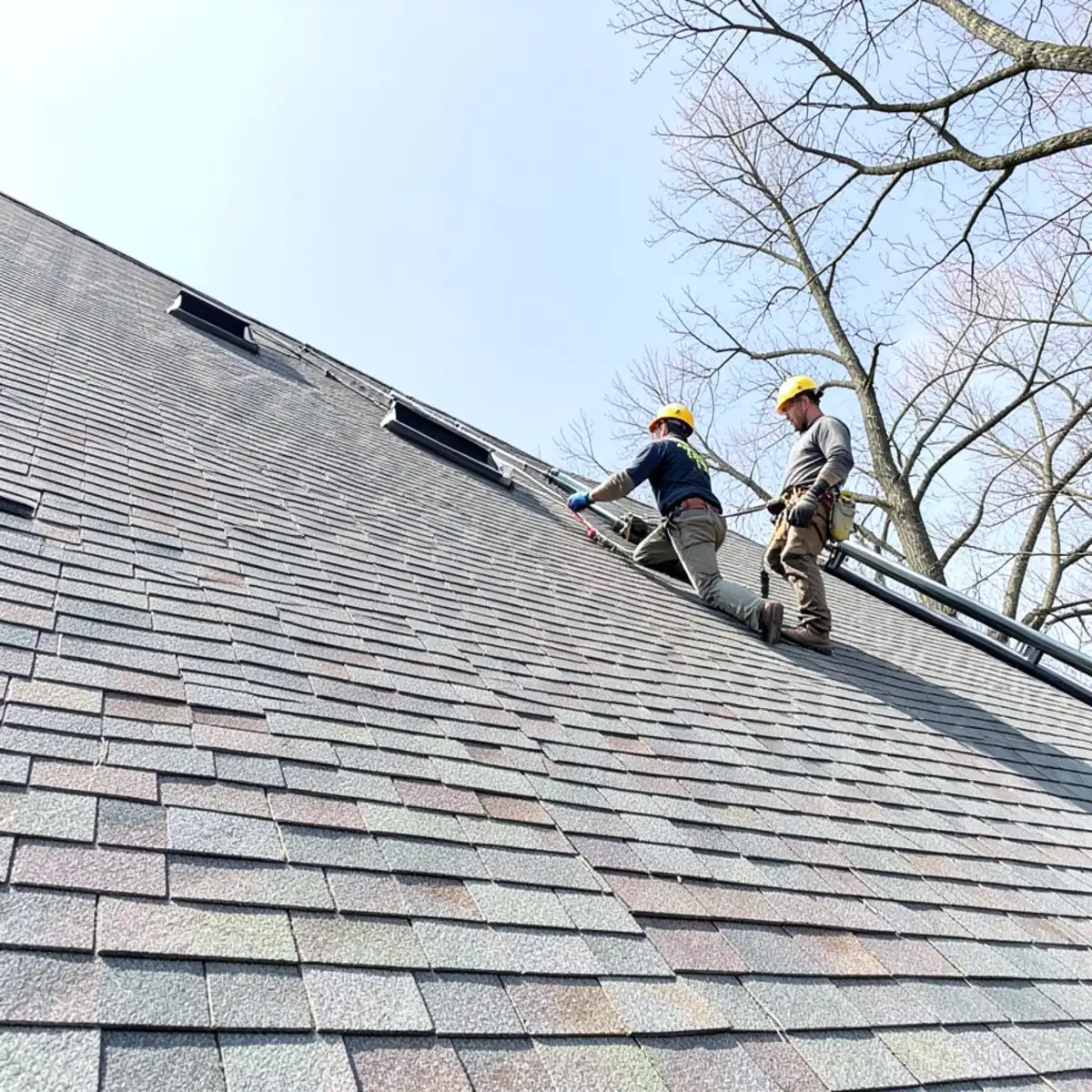
Site Protection
Protecting turf, structures, and utilities throughout the operation.
ANSI A300 Standards: Why Proper Pruning Cuts Protect Tree Health
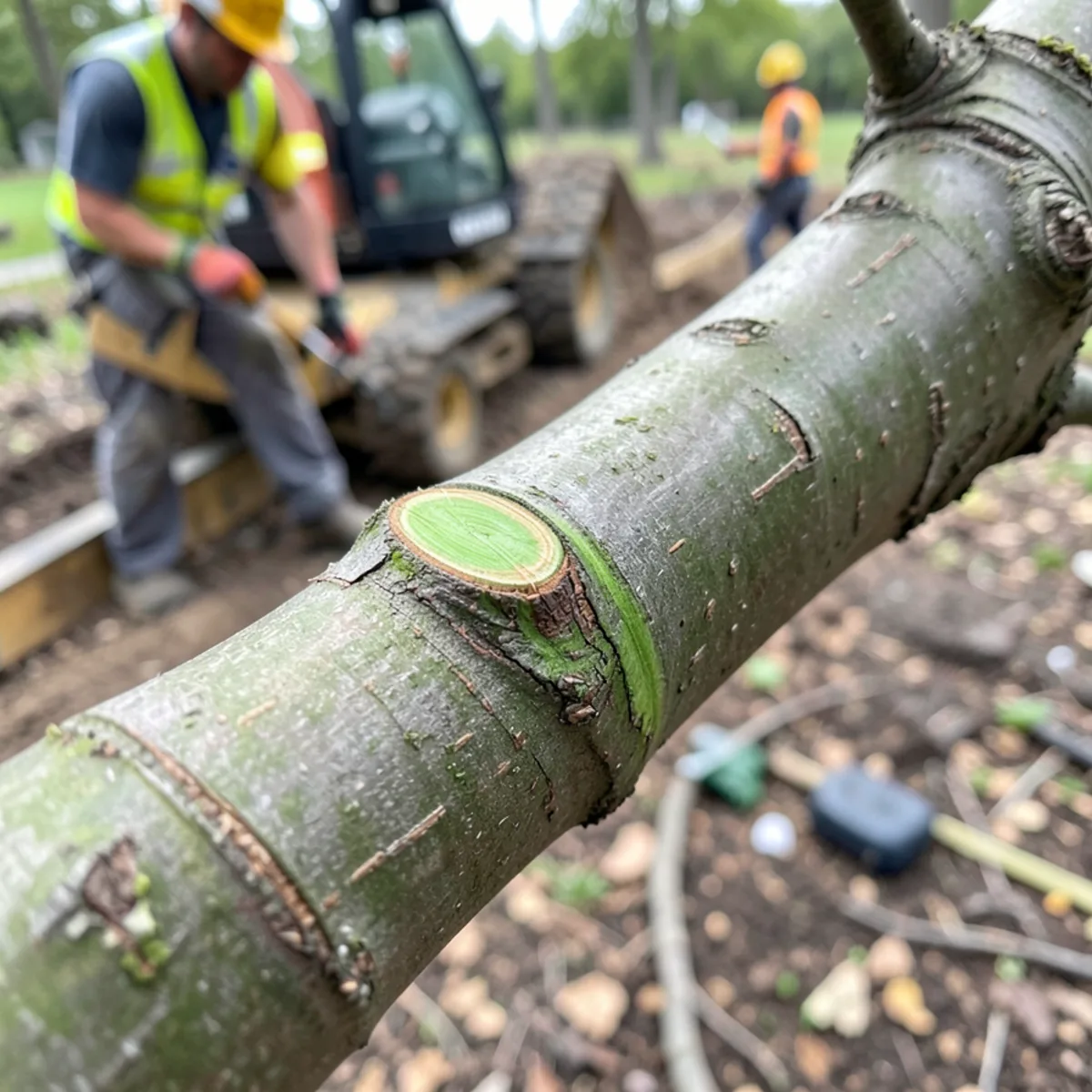
How an arborist severs a branch determines whether a tree heals cleanly or develops catastrophic internal heartwood rot. Total Tree Maintenance operates strictly under ANSI A300 Part 1 standards for tree care operations.
Every pruning cut is executed with surgical accuracy just outside the branch bark ridge and branch collar—the swollen collar of specialized overlapping trunk tissue that contains the tree's natural chemical defense zone. We never make flush cuts against the parent stem (which destroys the branch collar) and never leave dying stubs that invite fungal colonization.
Most importantly, we NEVER top trees. 'Tree topping'—the indiscriminate heading-back of large limbs to crude stubs—is an obsolete, damaging practice. Topping starves a tree of nutrient-producing leaves, causes rapid heartwood decay through exposed cut faces, and forces the emergence of weakly attached water sprouts that break easily in moderate winds. We use natural crown reduction and directional pruning cuts to preserve natural tree architecture.
Ingham County Pruning Seasons: Understanding the Oak Wilt Window
Pruning timing in Mid-Michigan must be coordinated with regional tree biology and insect vector cycles. Oak wilt (caused by the fungal pathogen Ceratocystis fagacearum) is a deadly vascular disease widespread in Ingham, Eaton, and Clinton counties. It is spread by tiny sap-feeding nitidulid beetles attracted to fresh wounds on oak trees.
In accordance with Michigan State University (MSU) Extension and Michigan Department of Natural Resources (DNR) guidelines, red, black, and pin oaks must NEVER be pruned between April 15 and October 15. A single spring pruning cut can attract infected beetles and kill a century-old oak within six weeks. The mandatory safe window for trimming oaks is during winter dormancy (November through March), when beetles are inactive and tree sap is frozen.
Other deciduous species—such as silver maples, sugar maples, lindens, and honey locusts—can be pruned year-round for clearance and deadwooding, with late winter offering the clearest view of the tree's skeletal branch framework.
Step-by-Step: How Our Trimming Crew Operates on Your Grounds
Total Tree Maintenance executes a disciplined 5-stage pruning protocol designed to protect your lawn, structures, and landscaping while maximizing canopy health:
- 1. Ground Inspection & Priority Identification: The lead arborist conducts an on-site walkthrough with you, marking target limbs (roof rub points, deadwood, elevation clearances) and noting underground obstacles.
- 2. Safety Perimeter & Drop-Zone Staging: Crew members set up safety cones below the canopy drop zone and place composite ground protection mats over sensitive turf where equipment operates.
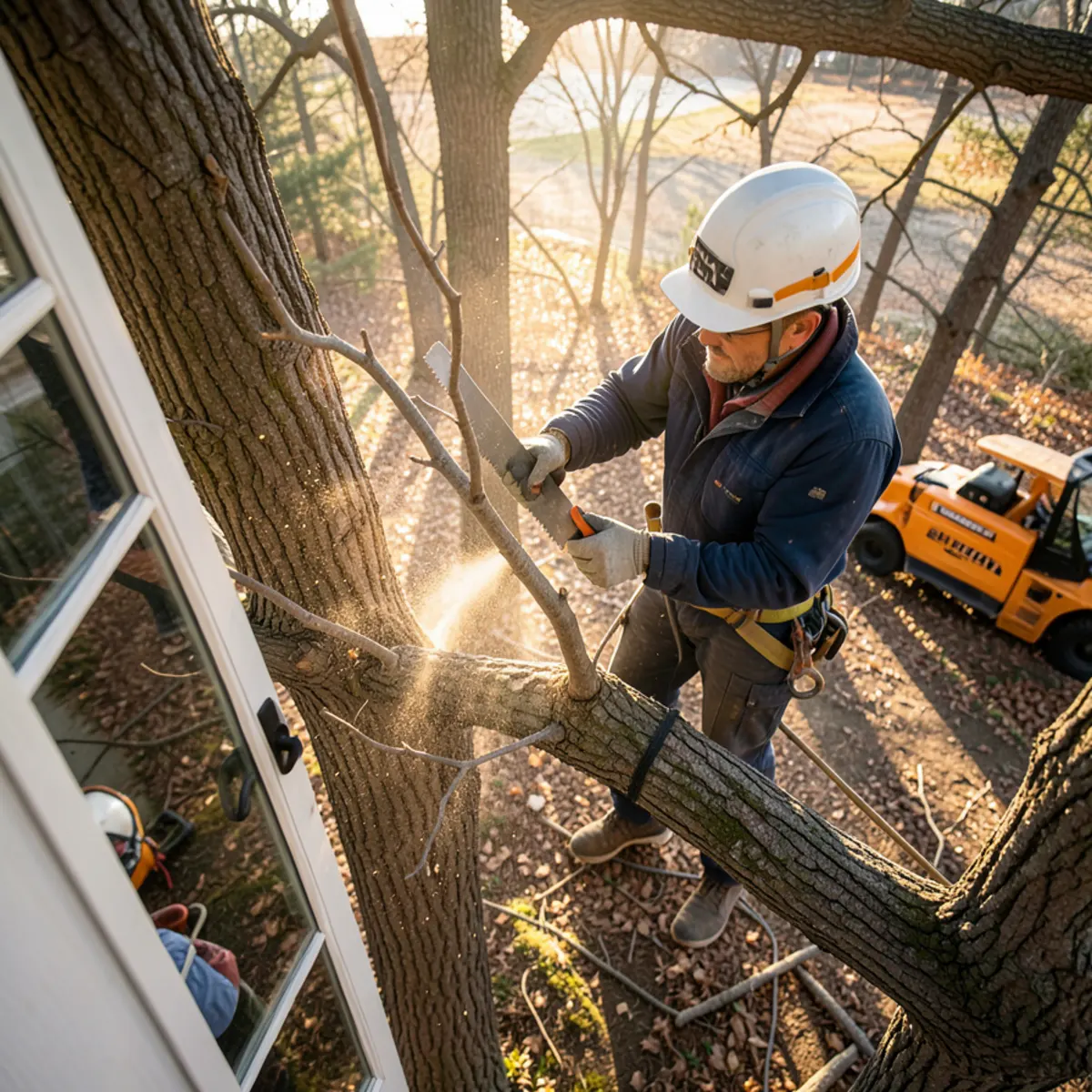
- 3. Precision Aerial Cutting: Arborists ascend using insulated aerial bucket trucks or rope-and-saddle climbing techniques. Using sharp, sanitized hand saws and lightweight motorized chainsaws, cuts are executed cleanly outside the branch collar.
- 4. Controlled Tagline Rigging: Heavy over-roof branches are rigged with arborist friction blocks and taglines, lowering timber gently to ground crews without shingle impact.
- 5. Chipping, Hauling & Thorough Raking: Ground crews immediately process severed branches through our brush chipper, rake all twigs from flowerbeds, and blow sawdust off decks and driveways.
Key Cost Factors for Tree Trimming in Greater Lansing
Tree trimming estimates in the Lansing area reflect five concrete operational variables rather than arbitrary guesswork:
1. Tree Height & Canopy Spread: A 30-foot ornamental birch requires significantly less labor and rigging setup than an 80-foot mature silver maple with a 60-foot canopy spread.
2. Volume of Deadwood & Overgrowth: Trees that have gone unpruned for over a decade require extensive crown cleaning and weight-reduction cuts compared to regularly maintained specimens.
3. Architectural & Obstacle Proximity: Limbs overhanging slate roofs, solar panels, detached garages, or overhead power service drops require delicate friction rigging and lowering lines.
4. Equipment Access: Front-yard trees easily reachable with our aerial bucket truck require less labor time than backyard trees accessible only through a narrow pedestrian gate requiring manual roped climbing.
5. Debris Volume & Chipping: Standard quotes include complete chipping and hauling of all pruned branches, leaving your property immaculate.
Michigan Tree Trimming Laws: Neighbor Overhang & Municipal Street Trees
Understanding legal boundaries prevents neighborhood disputes and municipal code violations when pruning near property edges:
Neighboring Tree Overhang: Under Michigan common law, a property owner possesses the legal right to trim tree branches that overhang their property line, up to the boundary plane. However, two strict limitations apply: you cannot trespass onto your neighbor's property to make cuts without permission, and the pruning must not cause permanent injury or death to the tree.
Curbside Boulevard Trees (Lansing Code §688.01): In the City of Lansing, trees planted in the easement strip between the sidewalk and street curb are public right-of-way trees under the jurisdiction of the Lansing Forestry Division. Homeowners may not prune, trim, or alter a public street tree without first obtaining a written permit from the Lansing City Forester.
Why Greater Lansing Homeowners Choose Total Tree Maintenance for Pruning
Tree pruning requires arboricultural knowledge, proper climbing physics, and respect for private property. Lansing homeowners rely on Total Tree Maintenance for four fundamental reasons:
1. ANSI A300 Compliant Work: We strictly observe natural compartmentalization biology and never top or mutilate shade trees.
2. Strict Oak Wilt Protection: We refuse to prune oaks during the April–October beetle vector window, safeguarding Lansing's mature oak canopy.
3. Advanced Aerial Equipment: With high-reach insulated bucket trucks and experienced tree climbers, we access the tightest urban backyards safely.
4. Free Itemized Written Estimates: We detail every pruning objective—from clearance dimensions to deadwood removal—in a clear, written proposal with zero hidden fees.
Communities Served Across Greater Lansing for Tree Trimming
Total Tree Maintenance provides scheduled structural trimming, crown thinning, and hazard deadwooding throughout the tri-county region:
Lansing Neighborhoods: Old Town, REO Town, Moores Park, Groesbeck, Westside, Colonial Village, and downtown residential corridors.
Tri-County Communities: East Lansing (campus-adjacent homes and pre-war rental properties), Okemos (winter oak pruning across wooded Meridian Township lots), Haslett (lakefront cottage canopies), Holt (Delhi Township subdivision silver maples), Grand Ledge (historic Eaton County yards), DeWitt (Clinton County windbreak thinning), and Mason (historic hardwoods).
Frequently Asked Questions About Tree Trimming & Pruning
Local answers regarding pricing factors, municipal bylaws, and safety procedures.
Late winter (November through March) is generally the best time for comprehensive structural pruning in Lansing. Deciduous trees are dormant, the branch framework is fully visible, and sap-feeding insects that spread diseases like oak wilt are inactive. However, hazardous, dead, or broken branches can and should be removed in any season.
Get a Free Estimate for Tree Trimming & Pruning in Lansing, MI
Call (321) 677-9055 today. We provide upfront, transparent written proposals with no pressure and no hidden fees.
Lansing Hub
3105 S MLK Jr Blvd
Transparent Pricing
Free Itemized Written Scope
Safety First
ANSI Z133 & MISS DIG 811
Storm Ready
Fast Local Crew Dispatch