
Direct Answer / Quick Summary
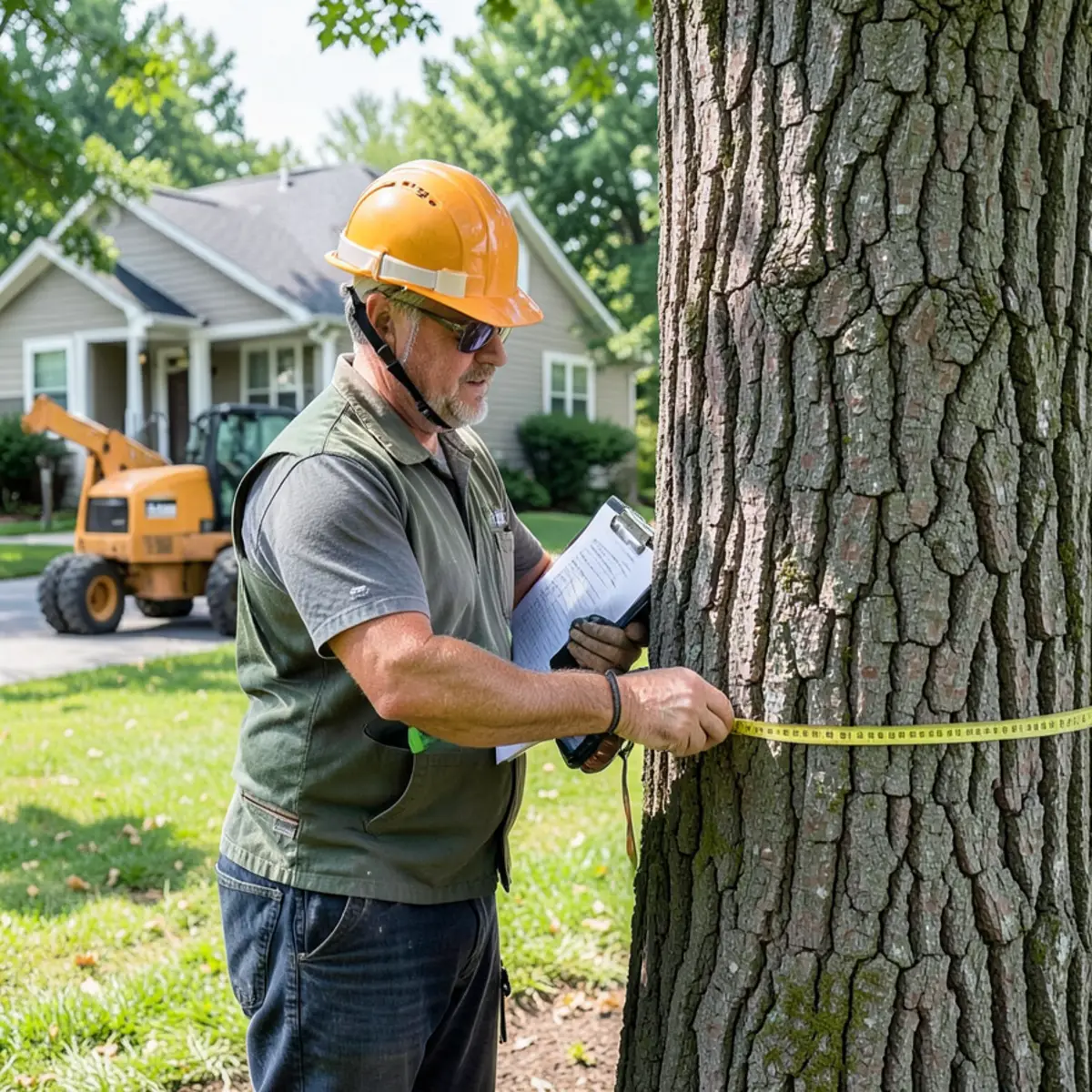
Tree removal costs in Lansing, MI typically range from $300 to $700 for small trees under 30 feet, $700 to $1,500 for medium trees from 30 to 60 feet, and $1,500 to $3,500+ for large trees over 60 feet. Main price drivers include physical height, trunk caliper, yard access, power line clearance, and stump grinding.
Why Tree Removal Estimates in Lansing Vary Widely
When Lansing homeowners begin researching tree removal costs, they frequently encounter contradictory figures online. One national home improvement directory suggests an average cost near $560, while another reports contractor fees ranging from $200 up to $3,500. According to regional Homeyou cost data surveying over 930 tree projects across Ingham County, the average residential tree removal project in Lansing lands around $875, with total invoices ranging between $250 for minor saplings up to $3,800+ for massive decaying hardwoods.
This wide disparity occurs because tree removal is an engineered rigging operation, not a standardized retail commodity. Every tree in Lansing represents a unique combination of physical mass, wood integrity, and site boundaries. Taking down a 25-foot ornamental birch tree in an open front yard in DeWitt involves modest labor and a single trailer. Removing an 85-foot decaying silver maple situated between two historic homes in East Lansing requires multi-person aerial crews, street closures, technical friction rigging, and heavy crane assistance.
Dealing with a Hazardous Tree in Lansing?
Call Total Tree Maintenance directly at (321) 677-9055 for immediate guidance and scheduled on-site estimates.
Lansing Hub
3105 S MLK Jr Blvd
Transparent Pricing
Free Itemized Written Scope
Safety First
ANSI Z133 & MISS DIG 811
Storm Ready
Fast Local Crew Dispatch
Typical Cost Bands by Tree Height & Caliper in Lansing
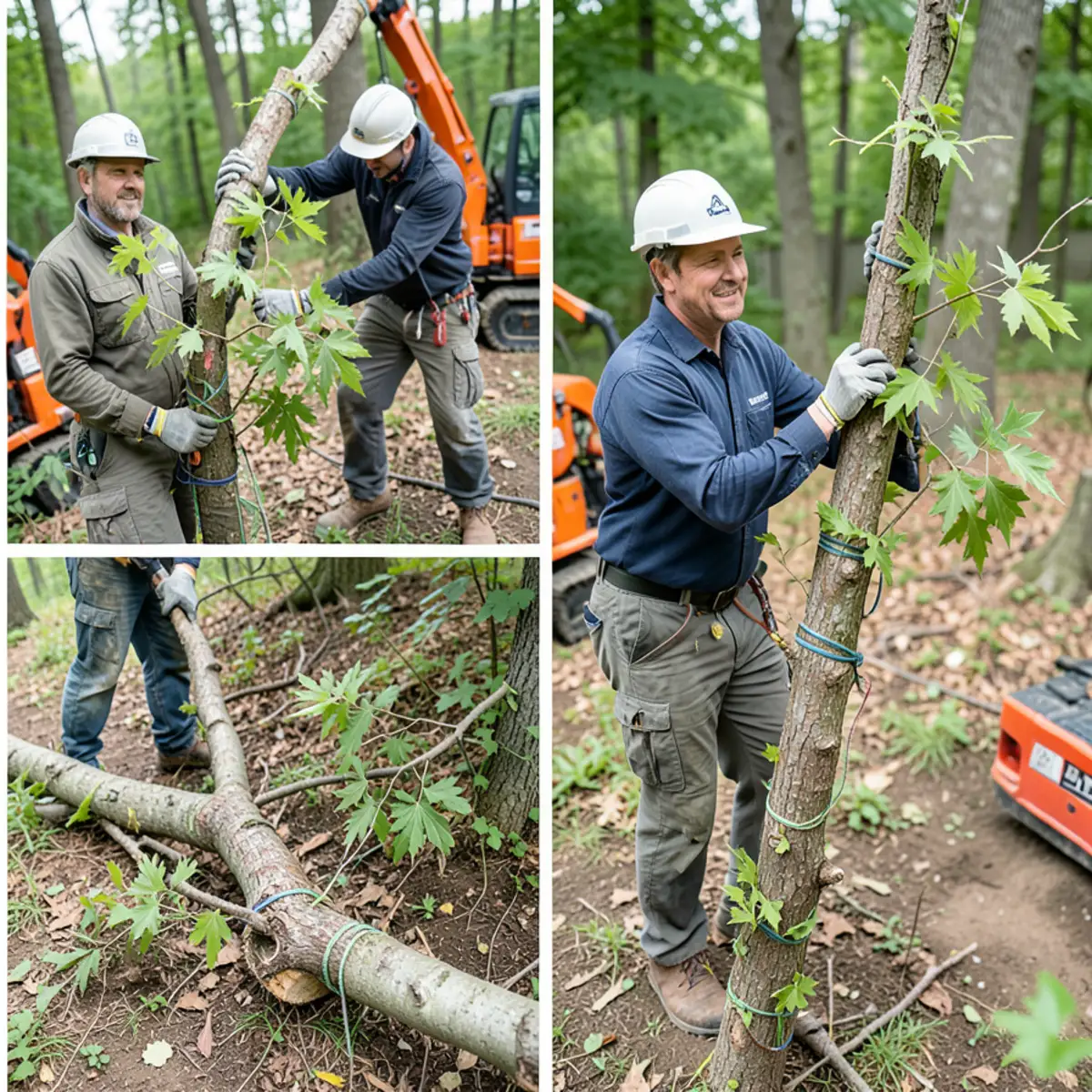
Contractor estimates across the Lansing metropolitan area generally group into three primary size tiers. Height and trunk diameter dictate the number of climber hours, rigging friction cycles, and cubic yards of wood mulch hauled away:
| Tree Height Band | Typical Local Price Range | Primary Price Drivers | Typical Lansing Species |
|---|---|---|---|
| Small (Under 30 Feet) | $300 – $700 | Minimal rigging, rapid ground cutting, light brush haul | Flowering crabapple, dogwood, Japanese maple, small birch |
| Medium (30 to 60 Feet) | $700 – $1,500 | Bucket truck reach, sectional canopy rigging, moderate log hauling | Green ash, mature birch, sweetgum, young red oak |
| Large (60 to 90+ Feet) | $1,500 – $3,500+ | Crane deployment, multi-stage rigging, tight lot access, overhead wires | Mature silver maple, pin oak, cottonwood, eastern white pine |
Key Site Factors That Influence Your Written Estimate
When our estimator walks your grounds, tree height is only the first data point. We examine five critical operational variables that directly impact crew hours and equipment needs:
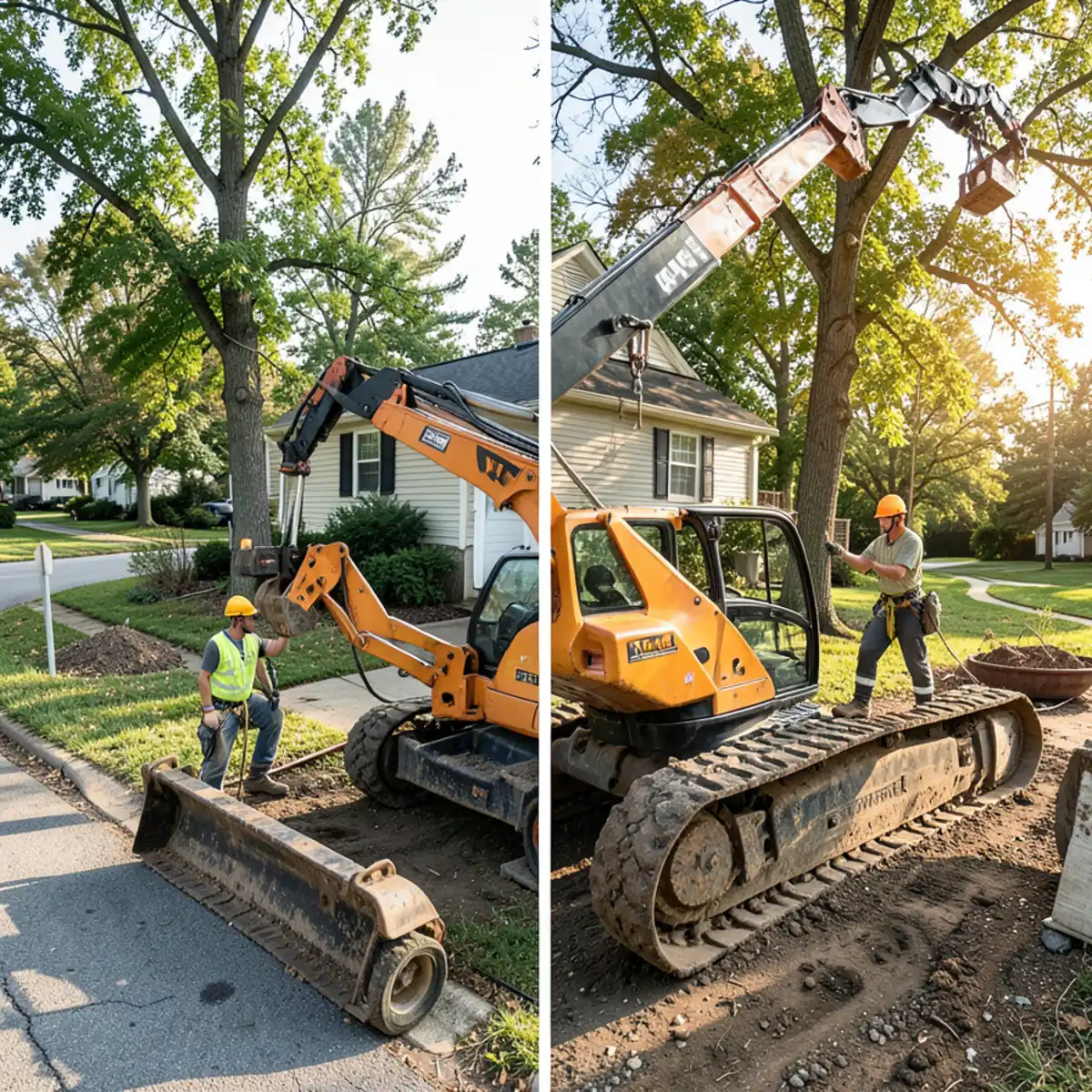
- 1. Physical Site Accessibility: Can our aerial bucket trucks back up directly to the tree from a paved driveway, or is the tree situated in a fenced rear yard accessible only via a 36-inch gate? Inaccessible backyards require manual roped climbing and motorized mini-skid steers to shuttle wood out, increasing labor time.
- 2. Proximity to Structures & Fragile Targets: Trees overhanging house rooflines, glass sunrooms, in-ground swimming pools, or decorative brick patios require delicate friction rigging and roping, where every severed piece is lowered under mechanical control.
- 3. Wood Condition & Deadwood Brittleness: Dead ash trees infested with emerald ash borer dry out rapidly. Brittle wood breaks unpredictably, meaning climbers cannot safely tie into upper limbs. These trees often require mobile crane hoisting, adding specialized machinery overhead.
- 4. Electrical Line Hazards: If branches touch or pass within 10 feet of energized lines, OSHA rule 29 CFR 1910.333 mandates certified line-clearance practices, often requiring coordination with Lansing Board of Water & Light (BWL) or Consumers Energy.
- 5. Scope Inclusions (Stump Grinding & Debris): A comprehensive quote itemizes brush chipping, trunk log haul-away, and below-grade stump grinding. Homeowners can often save on budget by electing to keep clean wood chips for garden mulch or firewood rounds on site.
Expert Insight: Bucket Truck vs. Crane vs. Manual Climbing Economics
A frequent question from homeowners in older Lansing neighborhoods like Westside, Colonial Village, and Moores Park is how equipment choices affect the bottom line. Understanding the operational trade-offs clarifies why a crane quote can often be more cost-effective than an all-day climbing operation.
Bucket Truck Operations: When a tree is within 50 feet of a solid driveway or road, an aerial bucket truck provides the most economical platform. The operator positions directly adjacent to the canopy, makes precision cuts, and lowers wood rapidly without rigging fatigue. Equipment costs remain modest.
Mobile Crane Extractions: For massive trees in tight backyards or severely decayed trees that climbers cannot ascend, mobilizing a hydraulic crane carries a higher base machinery fee. However, a crane can lift entire 2,000-to-4,000-pound canopy sections vertically over a two-story roof in 15 minutes. An operation that would take a three-man climbing crew 9 exhausting hours of piecemeal roping is finished in under 3 hours, drastically cutting labor hours, minimizing lawn impact, and eliminating structural risk to fences and outbuildings.
Manual Rope & Saddle Climbing: When fences, underground septic fields, or dense overhead wires prevent vehicle access, certified arborists must climb manually. Because every branch must be individually rigged, lowered, and manhandled through tight side gates, manual climbing represents the highest labor intensity per cubic yard of timber.
Stump Grinding Add-On Costs in Lansing
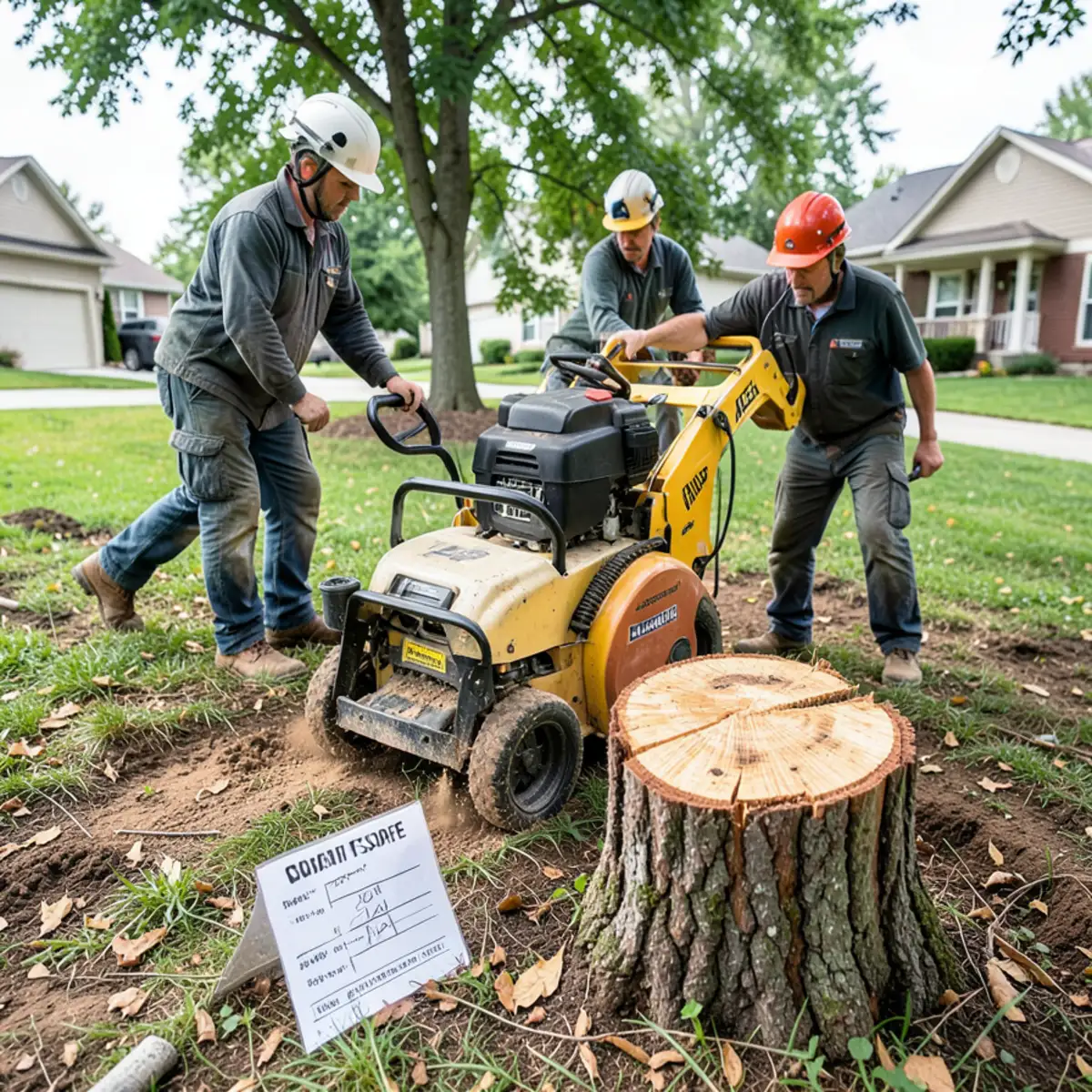
Most homeowners prefer to have the tree stump removed alongside the tree. In Lansing, stump grinding is typically priced as an itemized add-on rather than automatically bundled into the tree takedown.
Standard stump grinding in Mid-Michigan typically ranges from $150 to $400 per stump, depending on diameter (measured across the widest point of the root flare at ground level) and depth. Grinding 4 to 6 inches below grade is standard for lawn reseeding. If you plan to plant a new shade tree or install a concrete walkway in the exact location, deep grinding (10 to 18 inches below grade) involves additional passes and higher machine wear.
Debris Processing, Wood Mulch & City Disposal Dynamics
Disposing of several tons of hardwood timber and leafy brush incurs substantial processing and transport overhead. Total Tree Maintenance operates high-capacity commercial brush chippers that reduce branches into uniform organic wood chips right in your driveway, packing cubic yards of debris tightly into covered chip trucks.
Under Michigan Department of Agriculture & Rural Development (MDARD) plant health guidelines, hardwood materials—especially ash and oak—are subject to regional pest and disease transport restrictions. We process materials responsibly through local Ingham County biomass and compost facilities rather than dumping unsorted debris in municipal landfills. Homeowners wishing to keep wood chips for garden beds or requesting cut 16-inch firewood logs can easily deduct debris transport fees from their final project invoice.
How to Evaluate Written Quotes Before You Sign
Michigan does not issue a specific state-level tree contractor license. As a result, anyone with a chainsaw can advertise tree services. To protect your home and avoid hidden surprise fees, follow these four rules when comparing estimates:
- Require an Itemized Written Scope: Ensure the quote clearly details whether debris hauling, brush chipping, wood chip disposal, and stump grinding are included.
- Verify Turf & Property Protection: Confirm in writing that the contractor will lay ground-protection mats to safeguard lawns and irrigation systems from machinery ruts.
- Check Municipal Jurisdiction: If the tree is between the sidewalk and curb in Lansing, confirm who pulls the City Forester permit under Lansing Code §688.01.
- Demand Direct Utility Coordination: Verify that the contractor coordinates with Lansing BWL or Consumers Energy if energized power lines are within 10 feet.
Frequently Asked Questions
Frequently Asked Questions
Clear answers regarding local Lansing permit rules, tree removal costs, and emergency response.
Tree felling and stump grinding utilize completely different machinery and crews. Felling uses chainsaws, bucket trucks, chippers, and cranes, while stump grinding requires heavy rotary cutting machines and prior MISS DIG 811 utility locates. Itemizing the stump allows homeowners to choose whether to keep costs lower or have the stump removed.
Field operations crew based at 3105 S Martin Luther King Jr Blvd, Ste B, Lansing, MI. Specialists in hazardous tree removals, emergency storm recovery, ANSI A300 pruning protocols, and municipal tree codes throughout Ingham, Eaton, and Clinton counties.
Related Tree Services & Areas
Have Questions About Your Trees?
Our Lansing-based team provides honest evaluations and free on-site estimates. Call (321) 677-9055 today.
Lansing Hub
3105 S MLK Jr Blvd
Transparent Pricing
Free Itemized Written Scope
Safety First
ANSI Z133 & MISS DIG 811
Storm Ready
Fast Local Crew Dispatch